Insecurity is a complex psychological state that many of us know all too well. It is characterized by a persistent lack of confidence, deep self-doubt, and feelings of vulnerability. Whether it stems from past experiences, social conditioning, negative self-talk, or even underlying pride, insecurity has a way of paralyzing us. It manifests in our lives through struggles with body image, an obsession with how others view us, a crippling fear of failure, or rigid perfectionism.
If you have ever felt completely inadequate for the things God has placed in front of you, you are in good company. Moses dealt with these exact same intense insecurities. When God called him to change history, his immediate reaction wasn’t bold faith—it was a protest.
1. Moses’ Initial Insecurity
When God spoke to Moses from the burning bush and commanded him to lead, Moses immediately looked at his own limitations:
“But Moses protested to God, ‘Who am I to appear before Pharaoh? Who am I to lead the people of Israel out of Egypt?’” — Exodus 3:11 NLT
In essence, Moses was saying, “Who, me? Um, Lord, I think you have the wrong person. Don’t you remember that I killed a man, and because of that, I ran out of fear into this desert, where I’ve been hiding for the last 40 years? There is no way I can do this.”
Notice what God doesn’t say. He doesn’t say, “Oh shoot, Moses! Thanks for reminding me. As the all-consuming, all-knowing Lord, I somehow forgot about your criminal record and your past failures .” Instead, God counters Moses’ insecurity with a simple promise: “I will be with you.” He adds that the ultimate proof that He sent Moses will be when Moses leads the entire nation back to worship on that very same mountain.
The lie of insecurity tries to convince you that you are somehow uniquely flawed compared to everyone else. This brand of “false humility” is actually a subtle sin of pride. While it is true that we don’t deserve the free gifts of the Lord’s mercy and grace, using the phrase “I am unworthy” often hides a belief that we have zero value, rather than a posture of true humility.
Can I encourage you today: You have immense value. You matter so much to the Lord that Jesus Christ was willing to die for you. Stop moping around and metaphorically whipping yourself on the back, assuming that constantly telling God how unworthy you are somehow makes you holy. It doesn’t. In fact, it frustrates the Lord because it implies He made a mistake on you—that He doesn’t know your past, or that your sins are somehow too massive for Him to forgive.
When Christ died on the cross, He declared, “It is finished.” Every single one of your sins has been washed in His blood. Your value is firmly anchored in Christ, not in your own performance. He calls you a son or daughter of the Most High God, a friend, an heir, and a warrior for His Kingdom. That truth should fire us up! Yet, even with these promises, Moses still harbored doubts.
2. God’s Reassuring Identity
Because Moses was still terrified of what people would think, he looked for an excuse to stall:
“But Moses protested, ‘If I go to the people of Israel and tell them, “The God of your ancestors has sent me to you,” they will ask me, “What is his name?” Then what should I tell them?’ God replied to Moses, ‘I AM WHO I AM. Say this to the people of Israel: I Am has sent me to you.’” — Exodus 3:13-14 NLT
God revealed His eternal, covenant name: Yahweh—the God of Abraham, Isaac, and Jacob. God was reminding Moses that the mission didn’t hinge on Moses’ identity, but on the authoritative identity of the “I AM.”
3. God’s Empowering Signs & Supportive Provision
As Moses continued to voice his fears in Exodus 4, God didn’t abandon him to his anxiety. Instead, He met him with practical reassurances:
- Empowering Signs (Exodus 4:1-9): God took the ordinary tool in Moses’ hand—a simple staff—and turned it into a vehicle for supernatural miracles. He showed Moses that His power would back the call.
- Supportive Provision (Exodus 4:10-17): When Moses pleaded that he was a poor speaker, God reminded him that He creates human mouths. Even then, in His immense grace, God provided Aaron to serve as a supportive partner and spokesman.
4. From Hesitation to Determination
Eventually, the moment came when Moses had to stop making excuses and step out. In Exodus 4:18-31, we see his courageous acceptance of the mission. He left the safety of his comfort zone, returned to Egypt, and stepped into his destiny.
This transformation from a hesitant, self-doubting runaway into a determined, history-making leader stands as a timeless inspiration. Your insecurities and fears do not disqualify you from your God-given role.
Stop measuring the size of your obstacles against your own strength, and start measuring them against the power of God. Trust His plan, step forward in bold faith, and find peace in the promise of Christ’s abiding, powerful presence with you always. He has already gone before you.
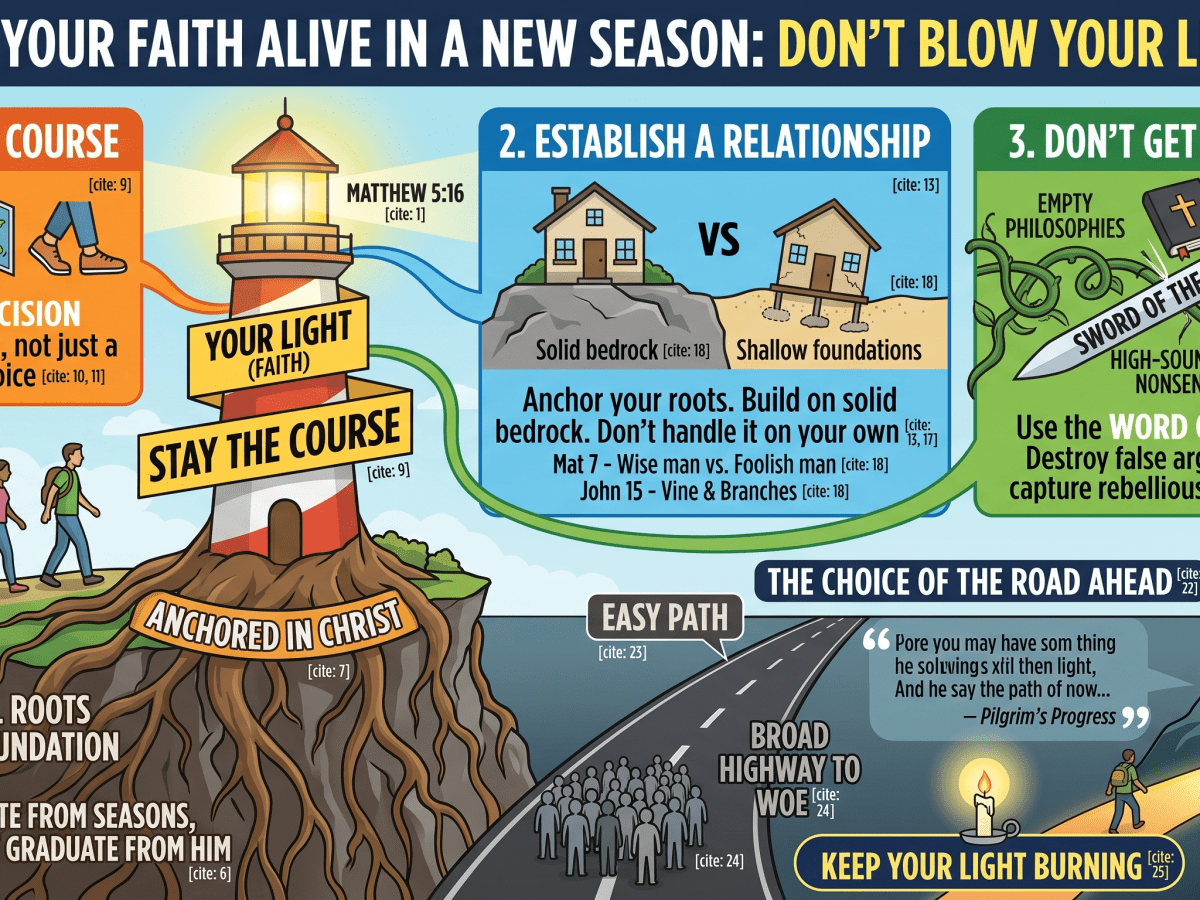
Don’t Blow Your Light Out: Keeping Your Faith Alive in a New Season
There is a story about a little girl who came home from Sunday school after learning Matthew 5:16: “Let your light so shine before men, that they may see your good works, and glorify your Father which is in heaven.” Intrigued, she asked her mom what it meant. Her mother explained, “Well, it means that…

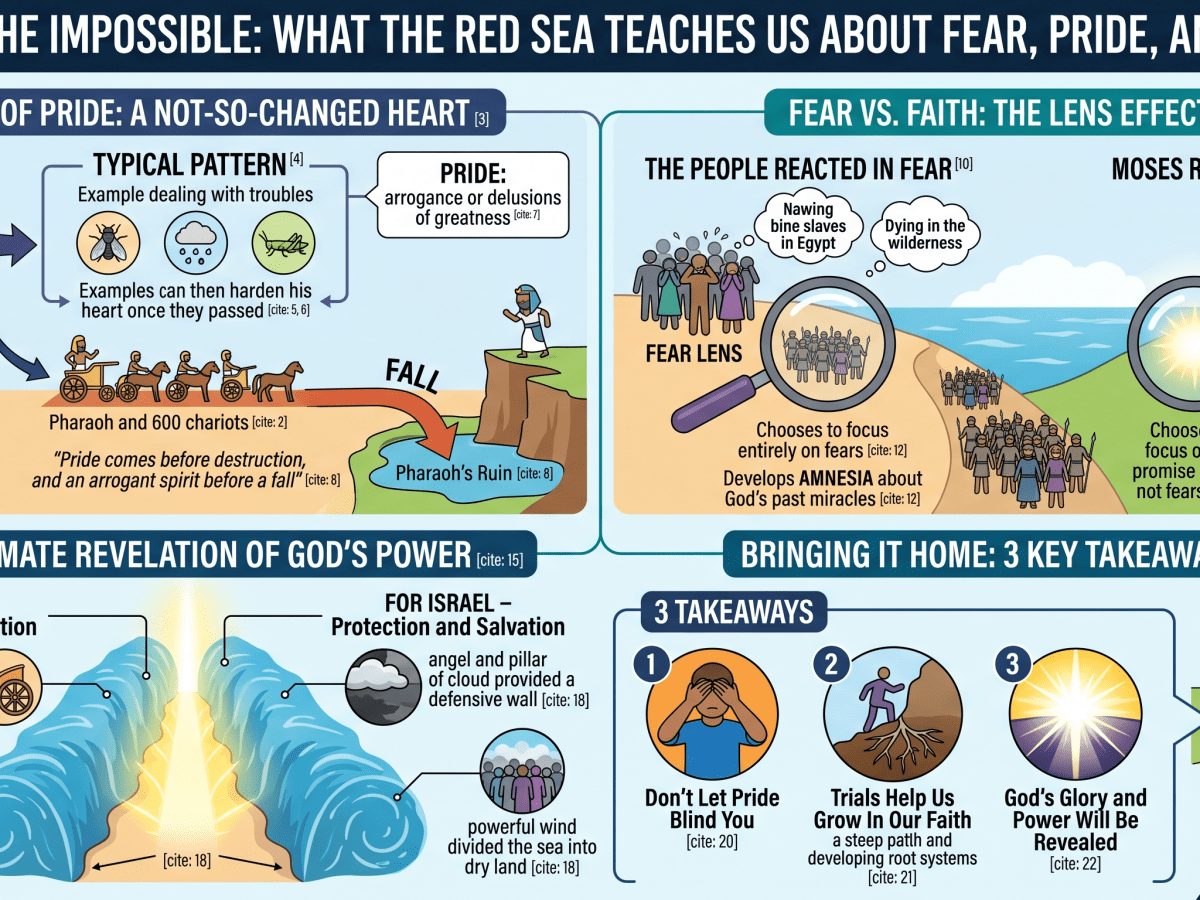
Facing the Impossible: What the Red Sea Teaches Us About Fear, Pride, and Faith
We all encounter seasons of intense trial and disappointment. Take the story of a young woman named Anne Steele. By the time she was nineteen, her mother had passed away, and a severe hip injury left her an invalid. Years later, she fell in love, but the day before her wedding, her fiancé tragically drowned.…
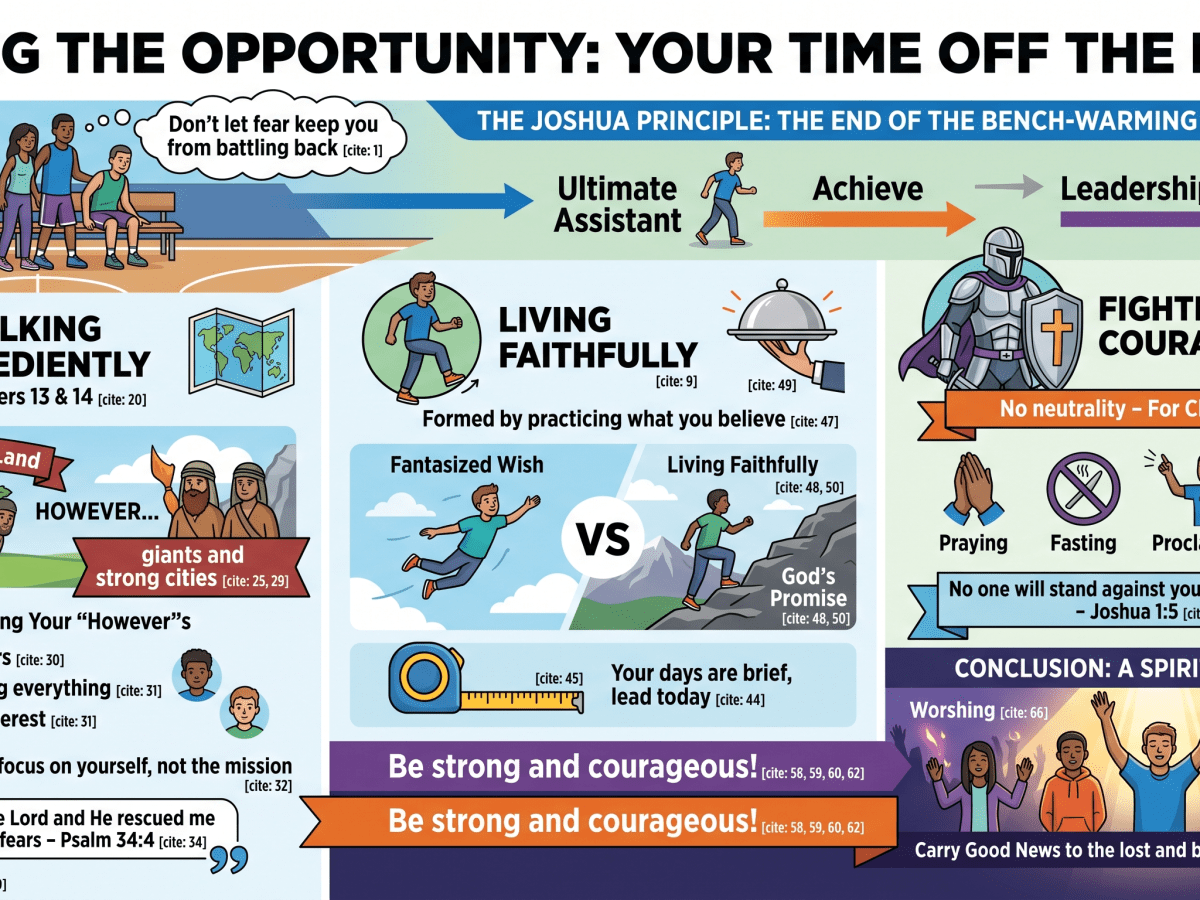
Seizing the Opportunity: It’s Time to Get Off the Bench
We’ve all seen it happen in sports: a team is down, the clock is ticking, and the starters are exhausted. But then, the coach turns to the bench. Someone who has been waiting in the wings steps onto the court, bringing fresh energy and a spark of courage, and turns the entire game around. They…


Leave a comment