Imagine a high-stakes boxing match in a packed arena. The lights are blazing, the crowd is roaring, and two fighters are going toe-to-toe in the center of the ring. Every single punch matters, and every round takes a physical toll.
But in between those exhausting rounds, something essential happens. The bell rings, and the fighter walks back to their corner. Waiting for them is a dedicated team. One person wipes the sweat from their eyes, another tends to a fresh cut, and the coach speaks life right into their ears: “You’ve got this. Keep your guard up. Stay focused.”.
The corner team isn’t throwing punches themselves, but they are absolutely critical to the outcome. They bring wisdom, care, correction, and encouragement. They know exactly when to challenge and when to comfort. Without a strong corner, no fighter lasts long.
But what if that corner team falls apart? What if the coach stands there yelling harshly, tearing the fighter down? What if nobody treats the wounds, and encouragement is entirely replaced by criticism or neglect? That fighter wouldn’t just lose the match—they might not even survive the ring.
This is the exact picture the Apostle Paul paints for us in 1 Timothy 5. The local church is not a crowd of passive spectators watching a fight from the bleachers—the church is the corner.
The Blueprint for a Spiritual Family
We are living in the middle of a very real, very bruising spiritual fight. People walk through our church doors every single week carrying hidden burdens, nursing wounds from life, and feeling completely exhausted. Like a boxer retreating to the corner, they don’t need more blows—they need a community that knows how to respond with love, honor, and truth.
Paul maps out exactly how our relationships should look within this spiritual family:
- Older men should be treated with the respect we owe a biological father.
- Younger men should be treated as brothers.
- Older women should be honored as mothers.
- Younger women must be treated with absolute, uncompromised purity as sisters.
If we want our message to reach a skeptical world, our relationships have to reflect Christ. As Jesus tells us in John 13:35, our sacrificial love for one another is the ultimate proof that we are His disciples.
Sacrificial love isn’t always comfortable—it costs us something emotionally, financially, spiritually, and chronologically. And let’s be honest: loving people can hurt. But just because someone may have taken advantage of your sacrificial love in the past doesn’t mean you stop investing in relationships. Bitter, hardened hearts only lead to a dry and dead church. Furthermore, we must remember that biblical love does not mean blanket tolerance. Our Heavenly Father didn’t send Jesus so our sins could be tolerated; He sent Him so we could live entirely free from them!
Caring for the Vulnerable and Stewardship of Resources
Paul goes even deeper by addressing how the church treats its most vulnerable members: widows who are completely alone in the world. In the first-century Roman world, women rarely had access to paid employment. Losing a spouse instantly created massive financial hardship, making their care a central ethical priority for the early church.
In fact, the church faced early structural growing pains over this exact issue. In Acts 6, a dispute arose because Greek-speaking widows were being overlooked in the daily distribution of food. The early believers didn’t argue over whether they should help; they organized and appointed wise, Spirit-filled leaders to ensure they were helping effectively.
To protect both the church’s resources and the people themselves, Paul outlines a clear stewardship framework. Families bear the first responsibility to step up and care for their own relatives, which pleases God and frees up church resources. For those older widows who are truly alone, the church steps in as an unwavering safety net. This isn’t cold legalism; it’s a strategic way to ensure that resources are concentrated exactly where vulnerability is highest. James 1:27 reminds us that pure and genuine religion means actively caring for orphans and widows in their distress.
Step Back into the Ring
While Paul specifically highlights physical widows, there is a broader spiritual definition we need to look at: to be a widow means to be deprived of something greatly valued or needed.
Look around your neighborhood, your workplace, or your school. Our culture is profoundly deprived of truth, love, hope, peace, and joy. And as the Church, we have exactly what this community needs.
Sharing the hope of Jesus Christ doesn’t have an age requirement:
- Kids and Students: Your classmates, teachers, and coaches need Jesus.
- Young Adults: Your college campuses and corporate workplaces need Jesus.
- Parents and Grandparents: Our families must be intentionally built on the foundation of Christ.
Lately, walking through heavy personal difficulties, it can feel like the hits just keep coming. It is easy to feel angry at the reality of death, weary of Satan’s persistent lies, and exhausted by the feeling that we are losing ground.
But if you try to fight the enemy in your own human strength, you will lose every single time. Instead of relying on our fleshly hands, we have to fight on our knees. We need to drop to our knees and remind the enemy of the Truth that stands: Death has been swallowed up in victory! Jesus is the way, the truth, and the life! And the King of kings will ultimately cast the devil into the lake of fire forever.
Now is not the time to quit, get lazy, or retreat. It’s time to strap up, put the armor of God back on, and step back into the fight! You do not have to fight alone. Look to your corner, lean on your spiritual family, get back up, and finish this race strong.
Personal Challenge & Reflection Questions
- Evaluate Your Corner: Honestly evaluate how you interact with others in the church family. Are your words and actions tending to the wounds of weary believers, or are you inadvertently adding to their blows through criticism, gossip, or neglect?
- Sacrificial Over Convenience: True biblical love is sacrificial and costs us something. In what practical area (time, finances, or emotional energy) is God asking you to selflessly invest in someone else this week?
- Engaging the Deprived Culture: Who in your immediate circle—whether at school, work, or home—is currently “deprived” of hope, truth, or peace? What is one concrete step you can take to bring the presence and truth of Jesus into their fight?
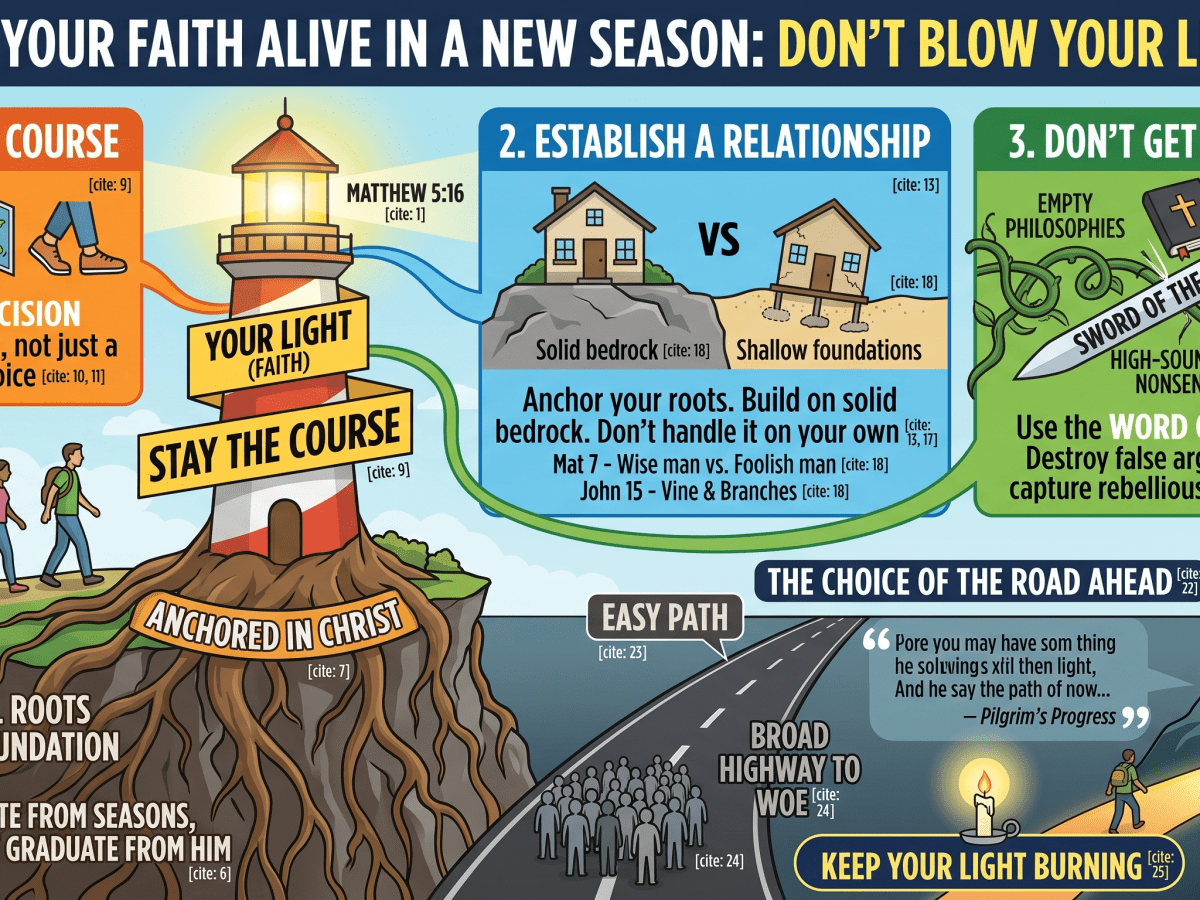
Don’t Blow Your Light Out: Keeping Your Faith Alive in a New Season
There is a story about a little girl who came home from Sunday school after learning Matthew 5:16: “Let your light so shine before men, that they may see your good works, and glorify your Father which is in heaven.” Intrigued, she asked her mom what it meant. Her mother explained, “Well, it means that…

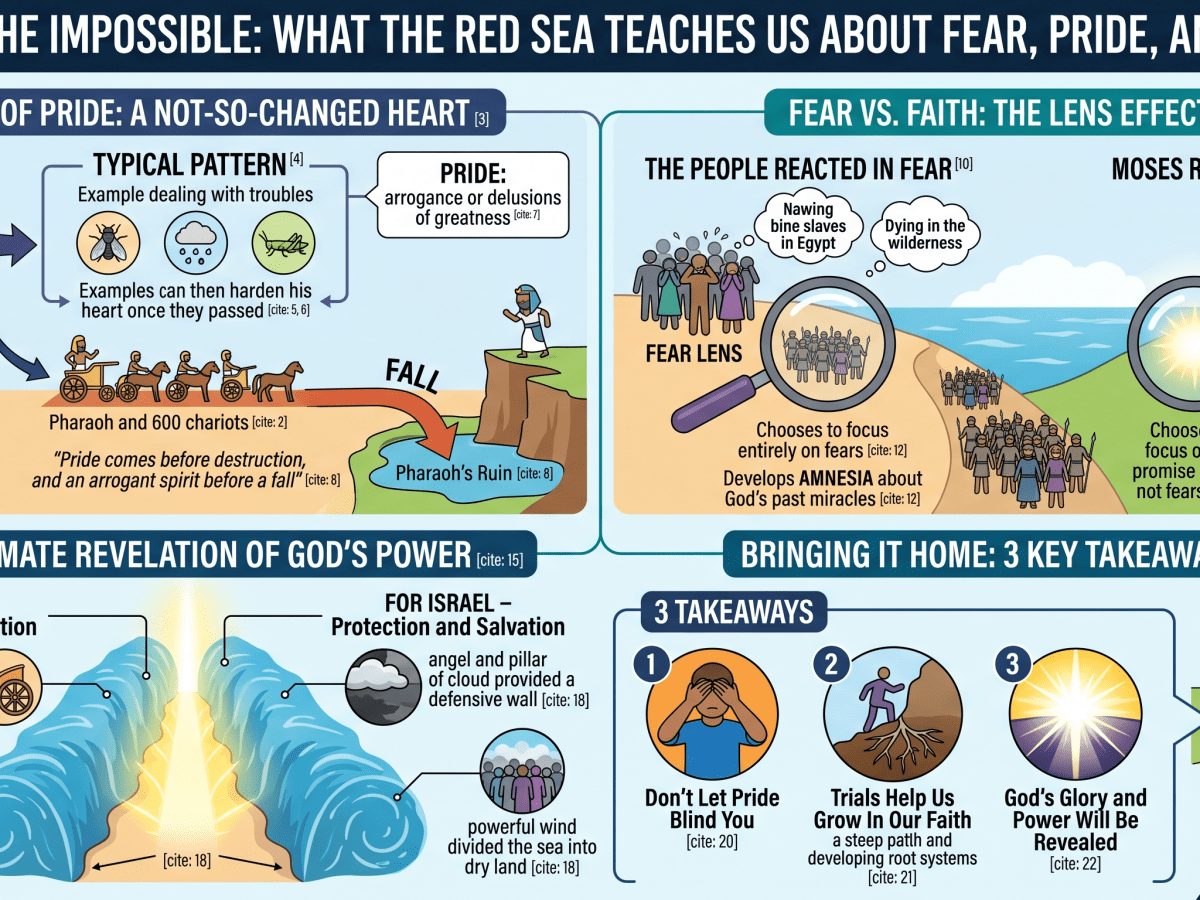
Facing the Impossible: What the Red Sea Teaches Us About Fear, Pride, and Faith
We all encounter seasons of intense trial and disappointment. Take the story of a young woman named Anne Steele. By the time she was nineteen, her mother had passed away, and a severe hip injury left her an invalid. Years later, she fell in love, but the day before her wedding, her fiancé tragically drowned.…
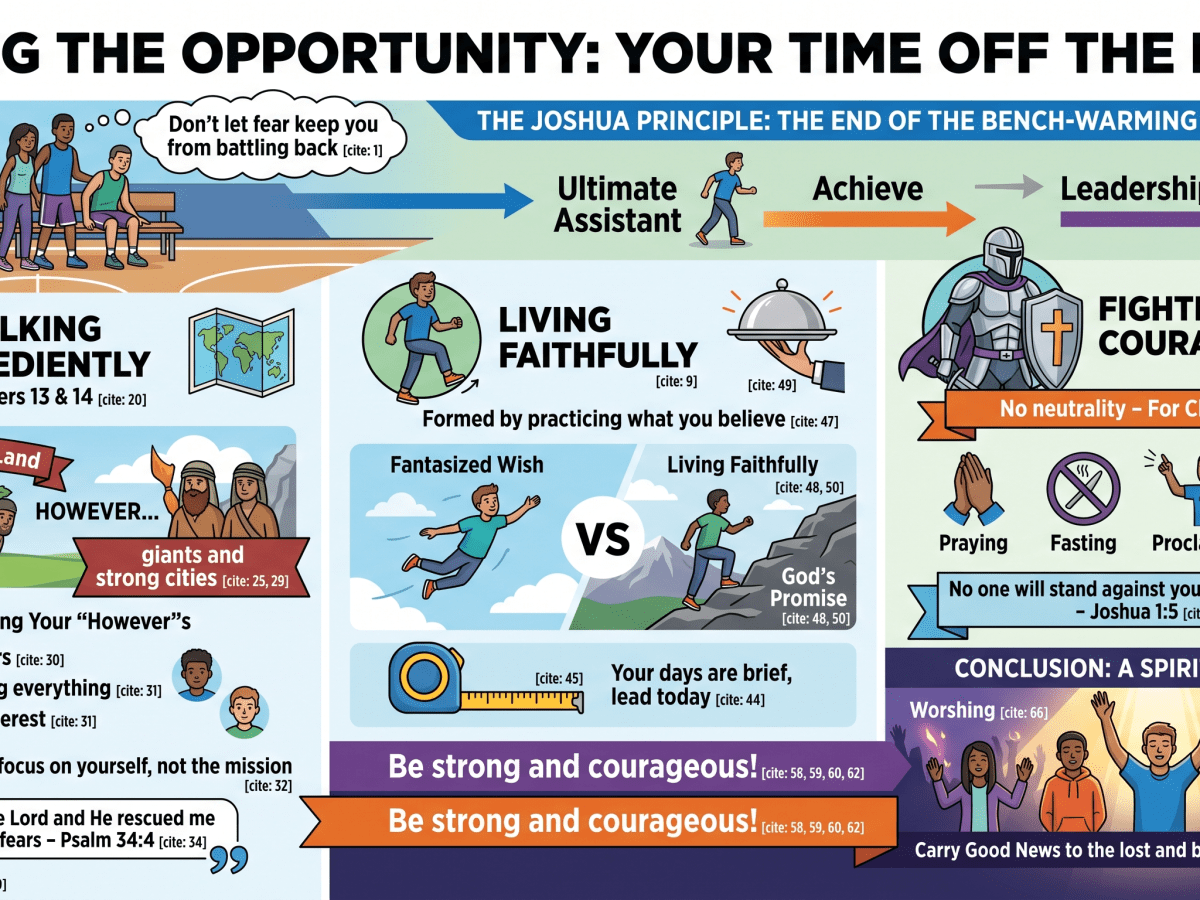
Seizing the Opportunity: It’s Time to Get Off the Bench
We’ve all seen it happen in sports: a team is down, the clock is ticking, and the starters are exhausted. But then, the coach turns to the bench. Someone who has been waiting in the wings steps onto the court, bringing fresh energy and a spark of courage, and turns the entire game around. They…


Leave a comment