We live in a broken world where pain, trials, and unexpected suffering will inevitably knock on our door. When fierce winds begin to blow, it is incredibly easy to spiral into bitterness, look for someone to blame, or set up camp in a state of constant complaining.
An unknown poet once penned a beautifully structured reminder called the “ABC’s of Trials” that reframes how we should navigate these heavy seasons:
Although things are not perfect Because of trial or pain, Continue in thanksgiving Do not begin to blame. Even when the times are hard, Fierce winds are bound to blow; God is forever able— Hold on to what you know… Move out of “Camp Complaining”— No weapon that is known On earth can yield the power Praise can do alone.
As we look at 1 Peter 4:12-19, the Apostle Peter directly addresses the reality of suffering. He pulls back the curtain on why we experience these seasons and hands us five explicit, ironclad resolutions for how a follower of Christ is called to respond in the midst of the furnace.
1. Don’t Be Surprised
“Dear friends, don’t be surprised when the fiery ordeal comes among you to test you, as if something unusual were happening to you.” (1 Peter 4:12)
It is fascinating that Peter explicitly warns us twice in his letter to guard against shock. He previously reminded us not to be surprised when the world disagrees with us or hates us , and now he declares that we shouldn’t be shocked when we enter “fiery ordeals”.
Why do we endure these trials? Peter gave us the structural answer back in chapter 1 : “…you suffer grief in various trials so that the proven character of your faith—more valuable than gold which, though perishable, is refined by fire—may result in praise, glory, and honor at the revelation of Jesus Christ.” (1 Peter 1:6-7).
Our trials are not random, chaotic accidents; they are custom-designed to test, refine, and prove our character in the faith. Just as the book of Job reveals, God is completely aware of exactly what is happening to you. The fire isn’t there to consume you; it’s there to burn away the dross and prove your faith genuine.
2. Rejoice in the Sharing
“Instead, rejoice as you share in the sufferings of Christ, so that you may also rejoice with great joy when his glory is revealed.” (1 Peter 4:13)
This sounds completely backward to human intellect. How can someone rejoice while they are hurting?
First, know that Peter isn’t preaching an abstract theory here; he is modeling a lifestyle. In Acts 5, after being arrested, beaten, and ordered to stop speaking about Jesus, Peter and the apostles left the Sanhedrin rejoicing that they were counted worthy to suffer dishonor for the Name.
We can rejoice because we know that the temporary, passing hardships of today are absolutely nothing compared to the weight of being in the uncompromised presence and glory of Christ. As Paul beautifully echoes in Romans 8:18, “For I consider that the sufferings of this present time are not worth comparing with the glory that is going to be revealed to us.”.
3. Recognize That You Are Blessed
“If you are ridiculed for the name of Christ, you are blessed, because the Spirit of glory and of God rests on you. Let none of you suffer as a murderer, a thief, an evildoer, or a meddler.” (1 Peter 4:14-15)
When you are insulted or persecuted on account of Jesus, the Bible doesn’t say you are cursed, forgotten, or abandoned—it says you are profoundly blessed. Jesus Himself laid out this reality layout in the Beatitudes: “You are blessed when they insult you and persecute you and falsely say every kind of evil against you because of me.” (Matthew 5:11).
The world hates authentic faith because it first hated Christ. If you blend perfectly into a faithless culture, the world will love you as its own. But when you are chosen out of it, the friction causes collision.
However, we must make a massive logical distinction here: not every bad thing that happens to you is holy persecution. Peter explicitly clarifies: “If you suffer, however, it must not be for murder, stealing, making trouble, or prying into people’s affairs.” (1 Peter 4:15 NLT).
If you get a failing grade because you didn’t do your homework, get grounded for disobeying your parents, get a speeding ticket for driving too fast, or experience relationship drama because you are acting arrogant and picking fights, that is not persecution—that is reaping the consequences of your own foolish behavior. True spiritual persecution is strictly on account of the righteousness of Christ.
4. Refuse to Be Ashamed
“But if anyone suffers as a Christian, let him not be ashamed but let him glorify God in having that name. For the time has come for judgment to begin with God’s household…” (1 Peter 4:16-17)
The world will try to use shame to force your conformity. It will make you feel outdated, foolish, or isolated for holding onto biblical truth. Peter hits back directly: do not be ashamed. Instead, wear the name of Christ as a badge of honor and use the trial as an immediate platform to bring glory to God.
Judgment begins with the household of God. If God is willing to allow His own children to pass through a refining fire to purify their faith, think about the terrifying final layout for those who actively disobey the Gospel. If the righteous are saved with difficulty through refining trials, the sinner and ungodly stand without hope before a holy Judge. Stand firm and glorify Him.
5. Entrust Your Soul to God
Peter concludes this heavy section with a final, anchoring resolution:
“So then, let those who suffer according to God’s will entrust themselves to a faithful Creator while doing what is good.” (1 Peter 4:19)
To entrust means to permanently put yourself into the active care, custody, and protection of someone else. David cried out in Psalm 31:5, “Into your hand I entrust my spirit; you have redeemed me, LORD, God of truth.”.
This is the exact posture Jesus modeled while hanging on the cross. In His final moments of intense human agony, He cried out with a loud voice, “Father, into your hands I entrust my spirit,” and breathed His last.
Jesus was entirely capable of handing His life over to the Father because He knew, with absolute certainty, that the Father was faithful and would perfectly care for Him. God validated that trust three days later by shattering the grave and raising His Son from the dead.
When you are in the middle of a fiery ordeal, stop trying to manage the fire in your own human strength. Entrust your life, your pain, and your future to your completely faithful Creator, and keep doing what is good. The furnace is temporary, but His glory is eternal.
Personal Challenge & Reflection Questions
- Reframing the Ordeal: Look at a current trial or pain you are experiencing. Have you been treating it as a surprising, unusual accident, or can you look at it through the lens of 1 Peter as a refining process designed to prove your faith?
- Persecution vs. Consequence: Honestly evaluate a recent conflict or difficulty you faced. Was it genuine persecution for the name of Christ, or was it a direct result of personal arrogance, meddling, or cutting corners?
- The Ultimate Hand-off: What specific anxiety, heartbreak, or trial do you need to stop holding onto today? How can you practically entrust it into the hands of your faithful Creator this week while continuing to do what is good?
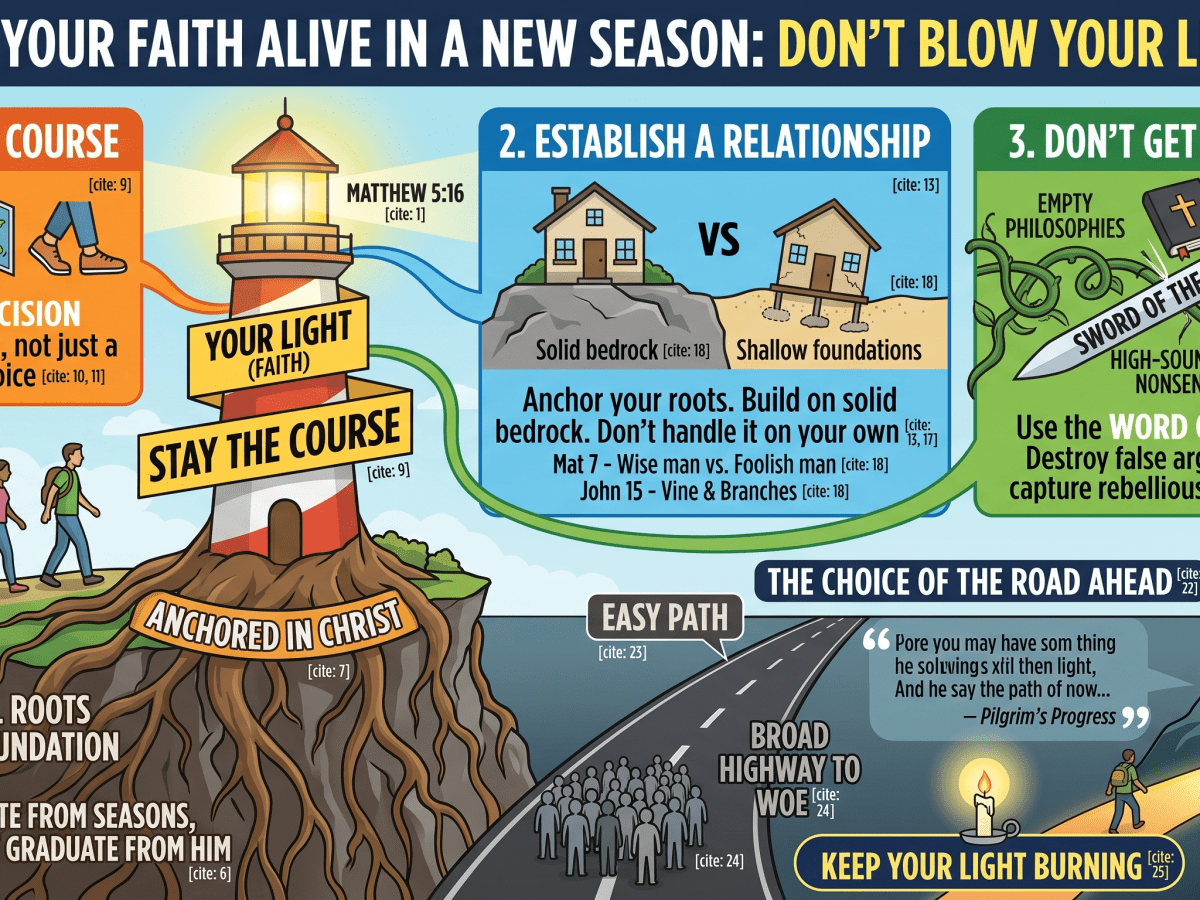
Don’t Blow Your Light Out: Keeping Your Faith Alive in a New Season
There is a story about a little girl who came home from Sunday school after learning Matthew 5:16: “Let your light so shine before men, that they may see your good works, and glorify your Father which is in heaven.” Intrigued, she asked her mom what it meant. Her mother explained, “Well, it means that…

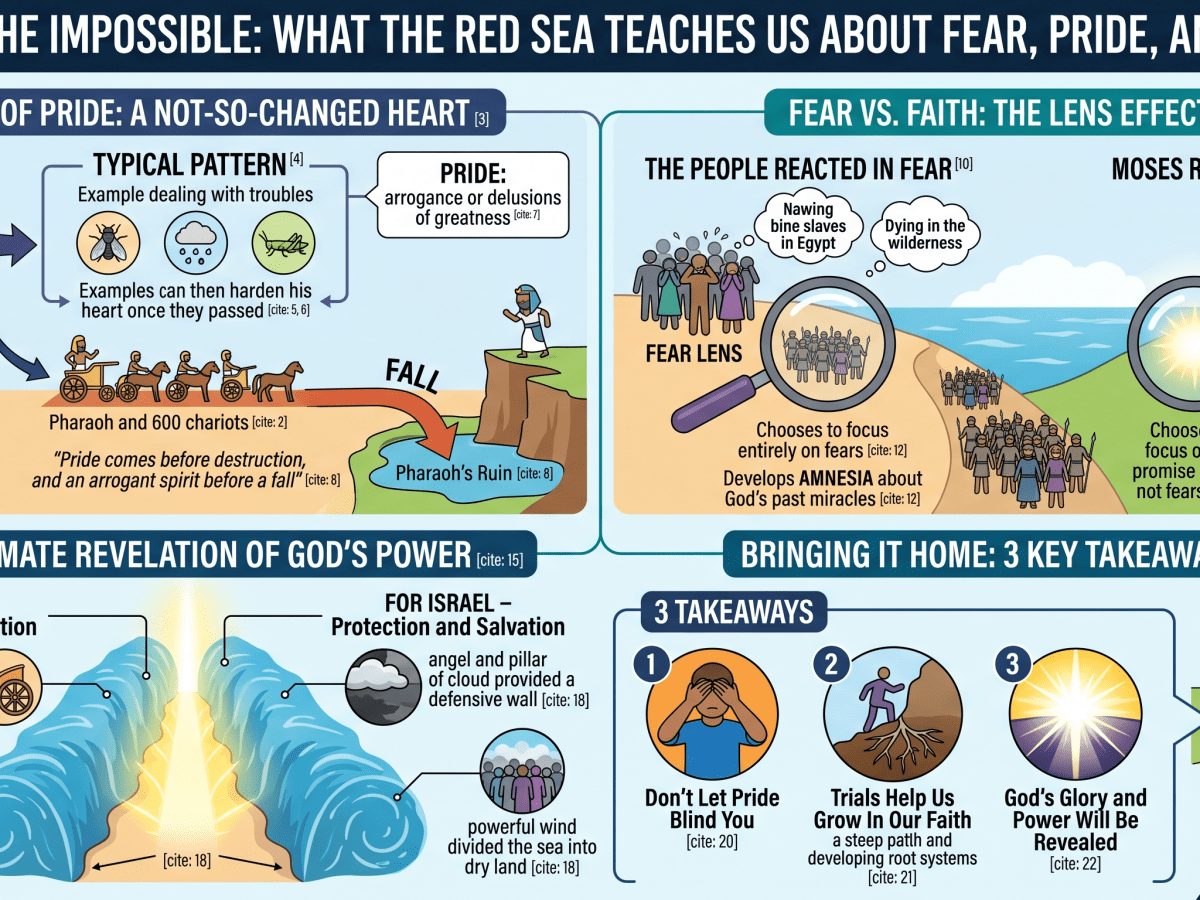
Facing the Impossible: What the Red Sea Teaches Us About Fear, Pride, and Faith
We all encounter seasons of intense trial and disappointment. Take the story of a young woman named Anne Steele. By the time she was nineteen, her mother had passed away, and a severe hip injury left her an invalid. Years later, she fell in love, but the day before her wedding, her fiancé tragically drowned.…
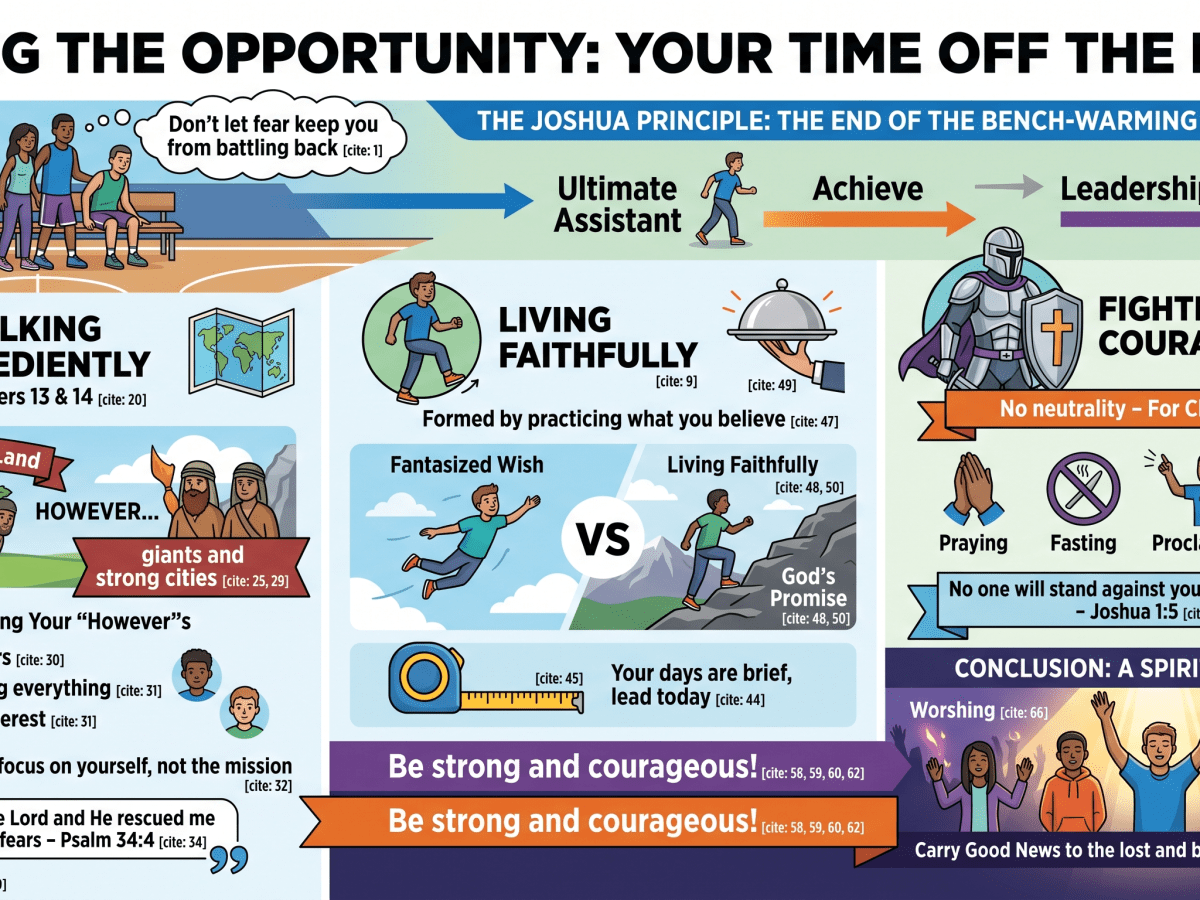
Seizing the Opportunity: It’s Time to Get Off the Bench
We’ve all seen it happen in sports: a team is down, the clock is ticking, and the starters are exhausted. But then, the coach turns to the bench. Someone who has been waiting in the wings steps onto the court, bringing fresh energy and a spark of courage, and turns the entire game around. They…


Leave a Reply