Samuel Clemens, globally celebrated by his pen name Mark Twain, was an extraordinarily gifted writer. Yet, beneath the brilliant humor and sharp wit lay a deep, bitter contempt for Christianity. He openly ridiculed those who believed the Bible and even labeled historic Christianity a “slaughterhouse religion” due to the core doctrine of blood atonement.
During his youth, Twain fell deeply in love with a young woman named Olivia Langdon, who came from a devout, faithful Christian family. While they were courting, Twain downplayed his extreme lack of faith, and Olivia eventually agreed to marry him. After their wedding, however, the mask came off. Twain returned to openly mocking Christianity. Before long, his persistent cynicism took its toll: Olivia stopped attending church altogether.
Years later, their family endured severe, catastrophic reversals, including a total financial collapse and the devastating death of a beloved daughter. Desperate to comfort his grieving wife in the darkness, Twain told her, “Livy, if it comforts you to lean on your faith, do so.”
Olivia looked back at him and replied sadly, “I cannot. I do not have any faith left.”
The Power of Influence
Olivia’s tragic story flashes a massive warning sign for believers today. The people we choose to spend our time with, alongside the cultural influences we consistently allow into our hearts—the music, books, social media feeds, and television shows—exert a dramatic, shaping influence on our souls. This is precisely why King Solomon warned us so clearly in Proverbs 24:1-2: “Don’t envy the evil or desire to be with them, for their hearts plan violence, and their words stir up trouble.”
Like Mark Twain, our modern culture is packed with voices that loudly mock the Christian faith. It forces a vital question to the surface: How are we supposed to live out our faith when we are completely surrounded by a faithless world?
Should we completely pull the plug on culture? Should we only have Christian friends and restrict our entire social life to church activities? While it is incredibly easy to get bogged down in an exhausting checklist of “Do’s and Don’ts,” we need to look at how Scripture models our interaction with an unbelieving culture.
Understanding the Cultural Trap
To engage the culture without being swallowed by it, we must first understand what the world is trying to do to us. The Apostle John provides an uncompromised definition of the world’s underlying system:
“Do not love the world or the things in the world. If anyone loves the world, the love of the Father is not in him. For everything in the world—the lust of the flesh, the lust of the eyes, and the pride in one’s possessions—is not from the Father, but is from the world. And the world with its lust is passing away, but the one who does the will of God remains forever.” (1 John 2:15-17)
Notice the three specific entry points the enemy uses to capture our hearts: the lust of the flesh (our physical desires), the lust of the eyes (our visual cravings), and the pride of possessions (our hunger for status and greed).
We see these exact three traps deployed against Jesus Himself in Matthew 4 when He was led into the wilderness to be tempted by the devil. Satan attacked Christ’s physical hunger by demanding that He turn stones into bread. He attacked the pride of life by daring Him to throw Himself off the temple pinnacle to force a miraculous angelic rescue. Finally, he flashed all the glittering kingdoms of the world and their splendor before Jesus’ eyes, offering them all in exchange for a single act of worship.
How did Jesus fight back? He didn’t use human arguments. He met every single cultural and satanic trap by declaring, “It is written,” anchoring His entire reality strictly on the unchanging Word of God.
The Paul Principle: Mission Over Isolation
If the world is so dangerous, shouldn’t we just remove ourselves from culture entirely?
The Apostle Paul answers with a resounding no. In 1 Corinthians 9:19-23, he outlines a brilliant, radical approach to cultural engagement:
“Although I am free from all and not anyone’s slave, I have made myself a slave to everyone, in order to win more people. To the Jews I became like a Jew, to win Jews… To those who are without the law, like one without the law… To the weak I became weak, in order to win the weak. I have become all things to all people, so that I may by every possible means save some.”
Paul refused to hide in a holy bubble. He deliberately stepped into different cultural spaces, intentionally adapting his vocabulary, context, and custom style to build bridges with the people around him. But notice his singular, unwavering motive: he did it entirely for the sake of the Gospel to save souls. Paul engaged with the culture to build relationships, but he absolutely refused to participate in the culture’s sin. He lived out the ultimate balance: he was in the world, but strictly not of it.
Permission vs. Edification
How do we draw that line practically in our everyday lives? Paul hands us a masterful framework for decision-making in 1 Corinthians 10:23: “Everything is permissible,” but not everything is beneficial. “Everything is permissible,” but not everything builds up.
When you are wrestling with whether to engage in a specific cultural activity, don’t just ask, “Is this a sin?” Instead, ask two deeper questions:
- Is this beneficial to my faith?
- Does this build up the people around me?
Paul explains that our Christian freedom should never be used to cater to our own self-interest, but to actively seek the good of the other person. If an unbeliever invites you over for dinner, go and enjoy the food with thanksgiving without overanalyzing the situation. But the exact moment your participation causes someone else’s conscience to stumble, or misrepresents the holiness of God, you step back.
Whether you eat, drink, or whatever you choose to do, the ultimate goal must always be the exact same: do everything exclusively for the glory of God. Seek the spiritual benefit of many so that they may ultimately be saved.
Personal Challenge & Reflection Questions
The “In the World vs. Of the World” debate isn’t an abstract theory. It requires real-world, honest self-examination regarding our daily habits. Take a moment to process these five direct cultural challenges through the lens of Paul’s instructions:
- The Company You Keep: Looking back at the tragic story of Mark Twain and Olivia, are the closest relationships in your life pulling you closer to Jesus, or are they subtly draining away your faith? Should a Christ-follower intentionally choose to date an unbeliever?
- Environments of Excess: Should a Christ-follower go to a concert or an event where they know they will encounter excessive drinking, drug use, or ungodly behavior? Is your presence there serving as a bold light, or are you secretly feeding a lust of the flesh?
- Media and Entertainment: When you watch a well-acted movie or television show that contains explicit, rated “R” content, is it genuinely beneficial to your mind, or is it gradually desensitizing your heart to things that grieve God?
- Peer Pressure and Habits: Whether it’s smoking e-cigarettes with friends just to fit in or dressing strictly based on what a hyper-sexualized culture dictates, where have you been sacrificing your distinctiveness just to avoid being slandered or viewed as different?
- The Ultimate Motive: Think about your upcoming weekend or social plans. How can you intentionally transition those activities from simple self-indulgence into strategic opportunities to glorify God and love the people around you?
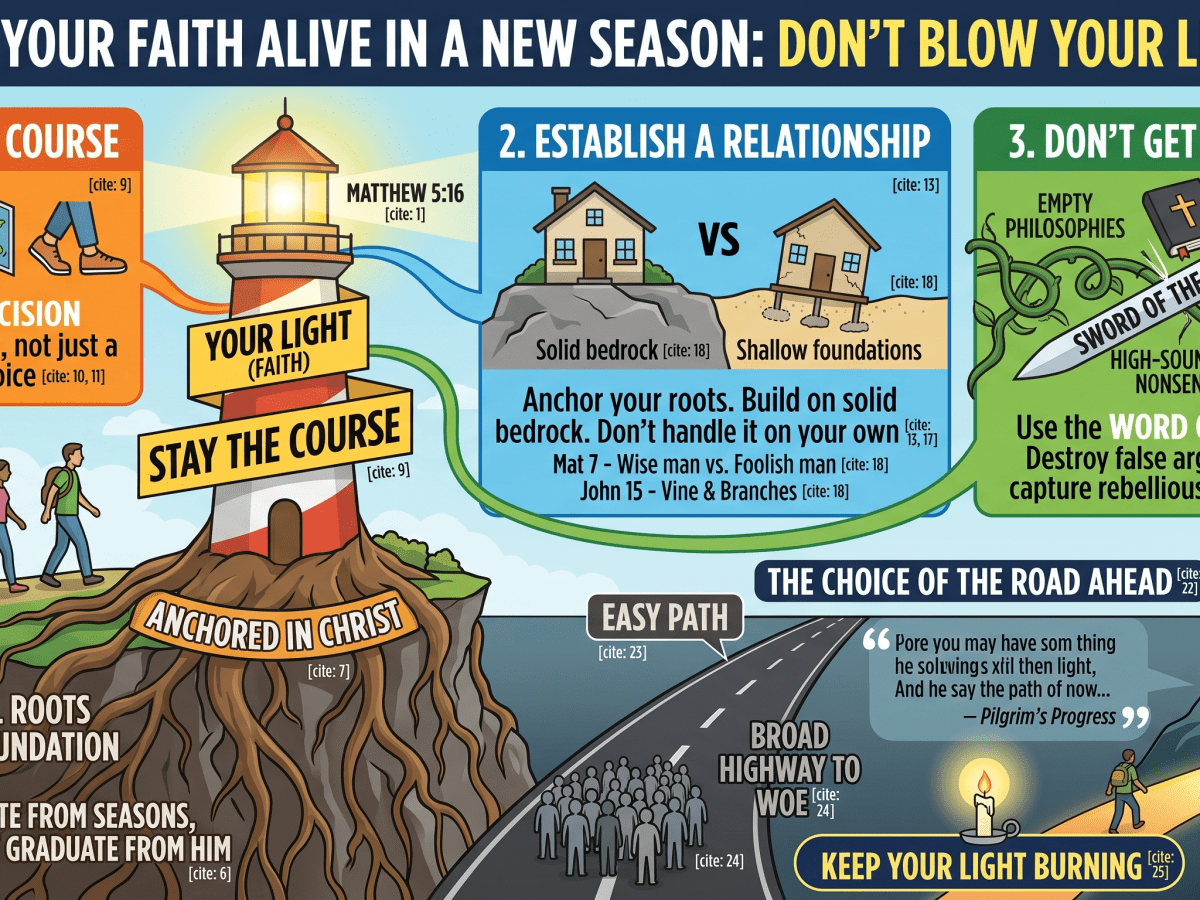
Don’t Blow Your Light Out: Keeping Your Faith Alive in a New Season
There is a story about a little girl who came home from Sunday school after learning Matthew 5:16: “Let your light so shine before men, that they may see your good works, and glorify your Father which is in heaven.” Intrigued, she asked her mom what it meant. Her mother explained, “Well, it means that…

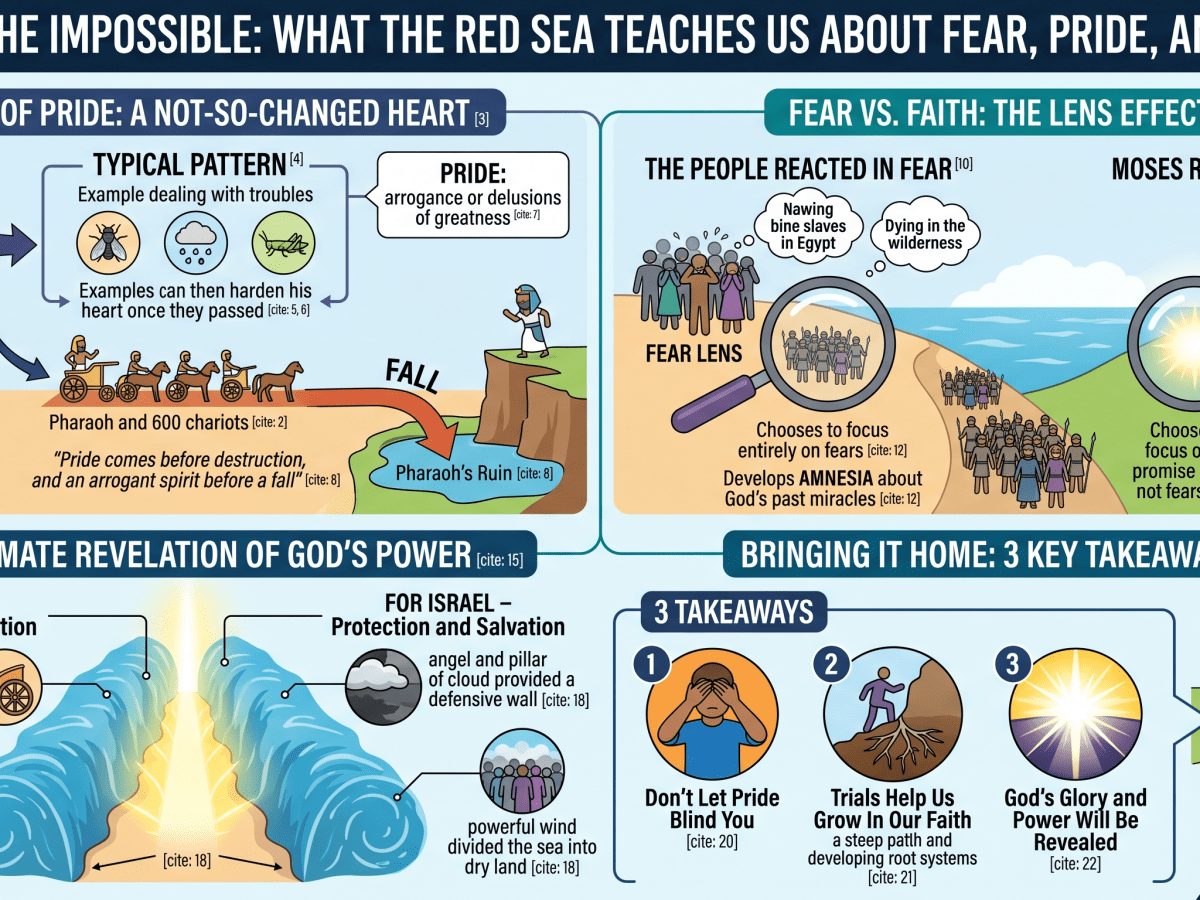
Facing the Impossible: What the Red Sea Teaches Us About Fear, Pride, and Faith
We all encounter seasons of intense trial and disappointment. Take the story of a young woman named Anne Steele. By the time she was nineteen, her mother had passed away, and a severe hip injury left her an invalid. Years later, she fell in love, but the day before her wedding, her fiancé tragically drowned.…
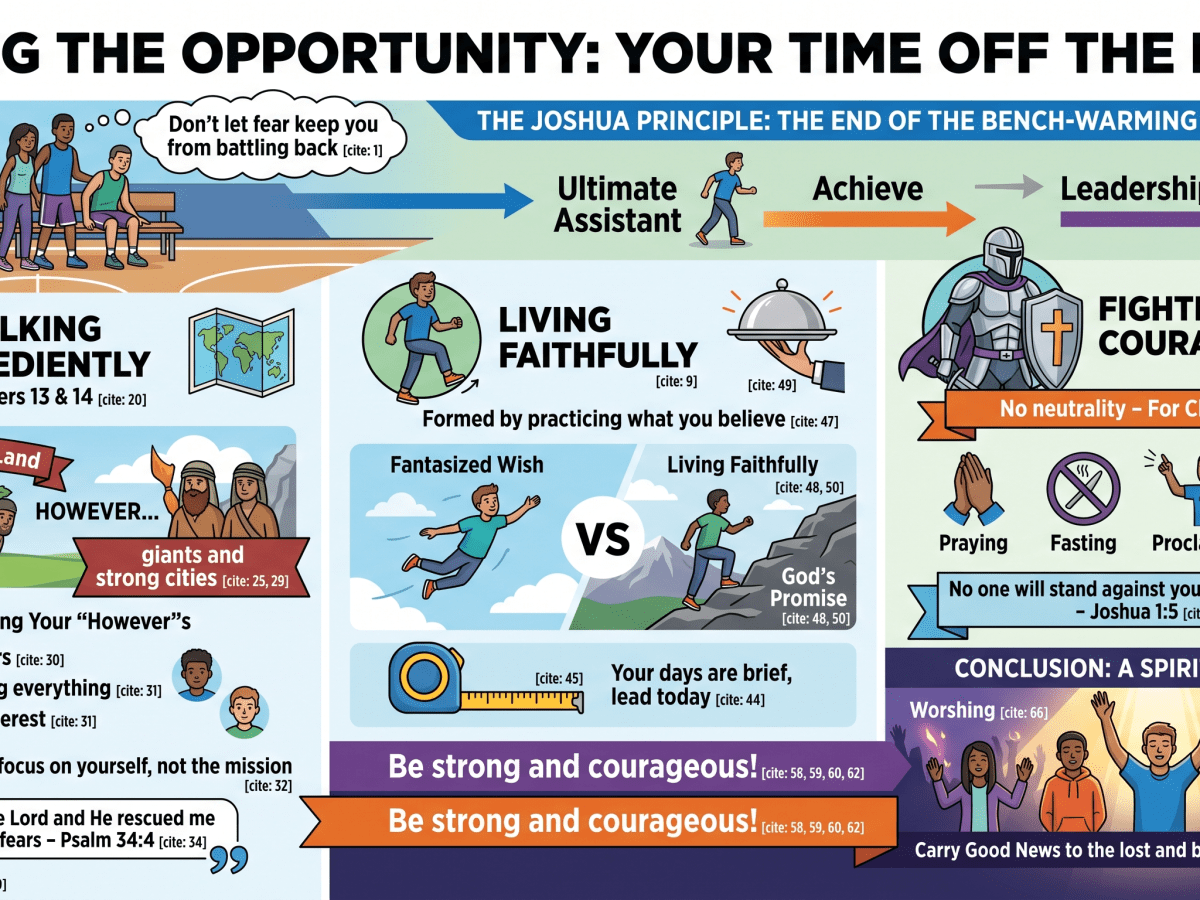
Seizing the Opportunity: It’s Time to Get Off the Bench
We’ve all seen it happen in sports: a team is down, the clock is ticking, and the starters are exhausted. But then, the coach turns to the bench. Someone who has been waiting in the wings steps onto the court, bringing fresh energy and a spark of courage, and turns the entire game around. They…


Leave a Reply